LTB Legislative Update (July 2026)
Ontario LTB Updates: New Rules Effective July 2026 and the 2026 Rent Increase Cap Slug: ltb-legislative-changes-july-2026 Category: Landlord and Tenant Board / News & Updates
Effective July 1, 2026
The Ontario Landlord and Tenant Board (LTB) implemented several updates effective July 1, 2026, to reflect amendments made to the Residential Tenancies Act, 2006. These updates include changes to certain LTB forms, operational processes, and guidance materials. Landlords and tenants should also be aware of Ontario’s rent increase guideline for the 2026 calendar year.
Legislative Amendments
The July 2026 updates reflect amendments introduced through:
-
Bill 60 – Fighting Delays, Building Faster Act
-
Bill 97 – Helping Homebuyers, Protecting Tenants Act
As a result of these legislative amendments, the LTB has updated various forms, instructions, and administrative procedures to align with the current legal framework.
Changes Regarding Tenant-Installed Air Conditioners
One of the notable changes concerns tenant-installed air conditioning units. The amendments provide a clearer framework regarding the installation, maintenance, and responsibility for these units, helping clarify the respective obligations of landlords and tenants where air conditioners are installed by a tenant.
The specific rights and obligations will depend on the circumstances of each tenancy and the applicable provisions of the Residential Tenancies Act, 2006.
Additional Changes Expected in September 2026
Tribunals Ontario has indicated that further legislative and procedural updates are expected to take effect in September 2026. Landlords and tenants with ongoing or upcoming LTB matters should remain informed, as additional changes may affect Board procedures and applicable forms.
Ontario’s 2026 Rent Increase Guideline
Ontario has established the 2026 annual rent increase guideline at 2.1% for most residential rental units that are subject to the guideline under the Residential Tenancies Act, 2006.
Where applicable, landlords seeking to increase rent within the annual guideline must generally provide tenants with at least 90 days’ written notice using the prescribed LTB form before the increase takes effect.
Not all rental units are subject to the annual rent increase guideline. The applicability of the guideline depends on the type of rental unit and the provisions of the Residential Tenancies Act, 2006.
Why These Changes Matter
These legislative updates affect both landlords and tenants by clarifying certain rights and responsibilities while updating the LTB’s administrative processes. Whether you are planning a rent increase, responding to an application before the Board, or dealing with issues relating to tenant-installed air conditioning units, understanding the current legal requirements can help avoid unnecessary disputes and procedural issues.
With additional amendments expected later in 2026, it is important to ensure that you are relying on the most current legislation, forms, and Board procedures.
Disclaimer
This article is provided for general informational purposes only and does not constitute legal advice. The information reflects publicly available materials as of July 2026 and may change as legislation, regulations, or Landlord and Tenant Board procedures are updated. Every legal matter is unique. If you require advice regarding your specific circumstances, you should obtain legal advice before taking action.
Sources
-
Tribunals Ontario – Landlord and Tenant Board Operational Update (June 30, 2026)
-
Residential Tenancies Act, 2006
-
Ontario Government – 2026 Rent Increase Guideline
Need Advice?
If you have questions about how these legislative changes may affect your rights or obligations as a landlord or tenant, our office would be pleased to assist you. Contact Ahangama Law Professional Corporation to discuss your situation and receive advice tailored to your specific circumstances.
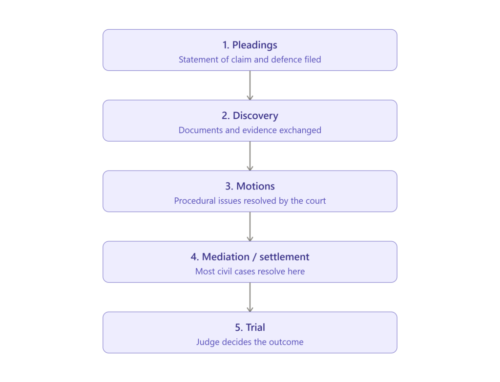
How a civil lawsuit moves through the courts
Most civil disputes in Ontario follow the same five stages, though not every case reaches trial. It starts with pleadings — the claim and defence that frame the dispute, followed by discovery, where both sides exchange documents and evidence.
Before trial, either party can bring a motion to resolve procedural issues, and most jurisdictions require mediation, which is where the majority of cases actually settle. Only a small fraction proceed to trial, where a judge weighs the evidence and delivers a decision.
Each stage carries its own deadlines — missing one can weaken a party’s position significantly, which is why early legal guidance often changes the outcome of a case.